
An old manuscript does not necessarily retain the cover in which its leaves first circulated. Rebinding can give an earlier text a later exterior. A single date attached to the entire object may hide that layered history.
Make two entries before combining them
Copy the catalogue’s date for the writing or manuscript production, then its description of the binding. Preserve words such as later, modern or possibly. If no binding date is supplied, leave that field unresolved rather than assigning the text’s date to it.
In an invented catalogue exercise, leaves are dated to the fifteenth century while the present binding is described as nineteenth-century. That does not make the writing nineteenth-century, nor does it identify every earlier binding the book may have had.
Follow evidence rather than the cover’s appearance
Wear, colour and a historical-looking decoration are not enough to date a binding yourself. A conservator or cataloguer may rely on construction, materials, tooling, records and other evidence that a front-cover photograph does not provide.
Keep images of the exterior connected to the correct volume and shelfmark. If a digital viewer begins with a recent protective case, do not automatically describe it as the manuscript’s binding. This distinction is useful when comparing online records: the text, leaves, binding and housing can each have their own histories. A careful note allows those dates to coexist instead of forcing the whole book into one moment.
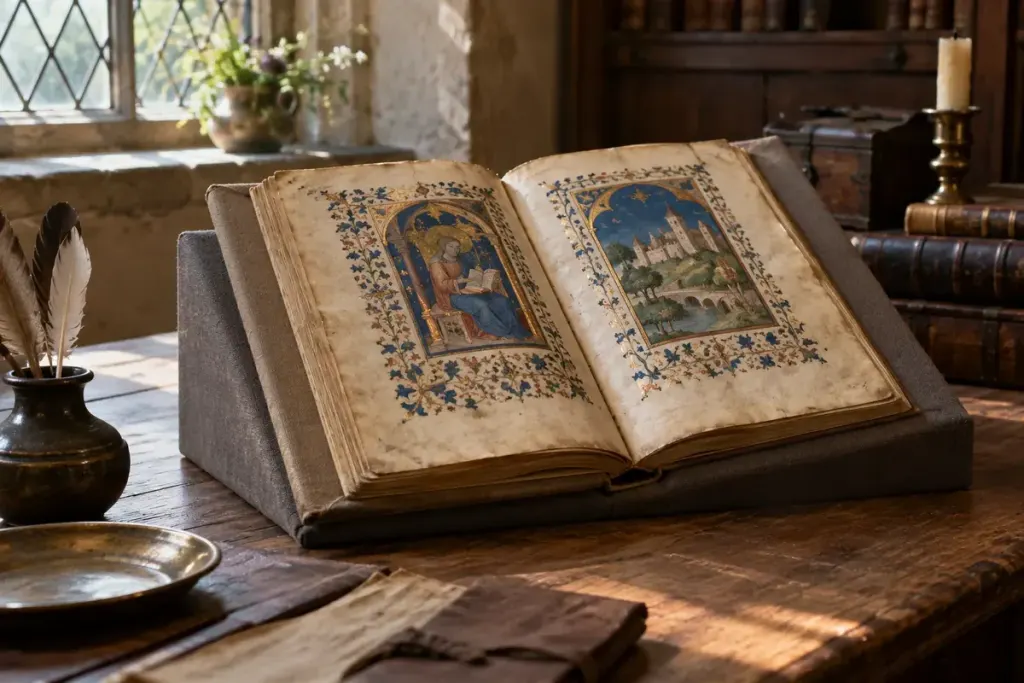
AI-generated editorial illustration; not a documentary photograph.