
Manuscript Notes
A Manuscript Catalogue Can Identify a Passage by Its Opening Words
Use opening and closing words in a manuscript catalogue as locating clues, while checking which work, passage and physical leaves the entry actually describes.
Use opening and closing words in a manuscript catalogue as locating clues, while checking which work, passage and physical leaves the entry actually describes.
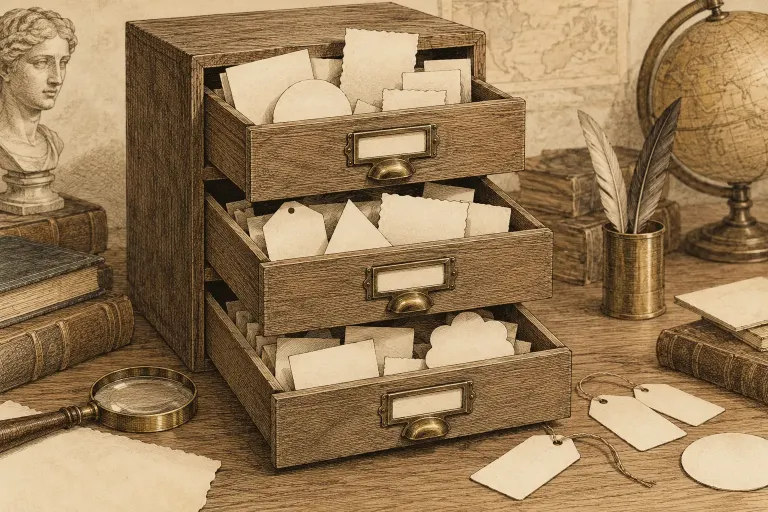
Keep the limits of historical evidence visible by distinguishing an unsuccessful search, a missing passage and a claim that something never existed.
Compare similar passages without jumping straight to a claim of dependence. Record wording, context and translation choices before evaluating a relationship.
Turn a specialist bibliography into a manageable reading plan by separating editions, translations and studies, then marking what you have actually consulted.
Read a date, name or note in a manuscript as evidence to interpret, keeping its wording, location and possible copying history visible.
Keep an institution’s manuscript identifier with your notes so a saved image remains connected to its catalogue record and the object it represents.
The Apocryphon of James shows why a familiar published title, the date of a manuscript and the proposed date of composition need separate notes.
The Dialogue of the Savior offers a useful distinction between names in a text and fuller identifications proposed by readers and scholars.